Explore our network of country and industry based websites to access localized information, product offerings, and business services across our group.
Log in to start sending quotation requests for any product.
Don't have an account? Sign Up Here
Log in now to access technical product documents from our product range.
Don't have an account? Sign Up Here
Home All Products Zinc Oxide (99.8%) - Indonesia
|
IUPAC Name |
: Oxozinc |
|
Cas Number |
: 1314-13-2 |
|
HS Code |
: 2817.00.00 |
|
Formula |
: ZnO |
|
Appearance Name |
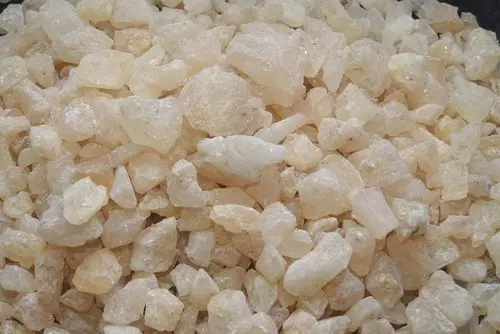
: White Solid |
|
Common Names |
: Zinc Oxide Powder, Chinese White |
|
Packaging |
: Flexibag 25 MT |
For more detailed information including pricing, customization, and shipping:
Brief Overview
ZnO is the formula for the inorganic compound zinc oxide. It is an insoluble white powder in water. It is a chemical or raw ingredient used in the production of many products, including antiseptics, animal feed, paints, pigments, ceramics, adhesives, plastics, tires, cosmetics, antiseptics, soaps, and ointments. It is also produced from zinc. Zinc oxide occurs naturally as zincite, a mineral found in the earth's crust. Having stated that, synthesized zinc oxide is mostly utilized in commerce.
Manufacturing Process
Several grades of zinc oxide can be produced using electrolytic zinc from approved suppliers. In the French Process for zinc oxide production, zinc undergoes melting, vaporization, and oxidation in controlled conditions to achieve particle sizes matching specific grades. After cooling, the zinc oxide is collected, sampled, and analyzed to ensure compliance with grade specifications. The application of statistical process control and quality assurance techniques ensures purity, consistency, and uniformity of particle size, connecting the quality assurance laboratory, production, and sales departments through an information system.
Rubber and Plastic Compounds
Zinc oxide finds application in rubber and latex compounds as an activator during curing and vulcanization, providing durability and abrasion resistance. It acts as a reinforcing agent and aids in protecting rubber and plastics, particularly outdoor weathering polypropylenes, from harmful UV rays. Additionally, it imparts heat resistance properties to various rubber and plastics compounds.
Specialty Chemicals
Zinc dispersions are utilized as components in rubber vulcanization, while zinc salts play a role in plastics production. Zinc borate and zinc chlorides are employed as flame-retardants, and zinc diacrylate is a crucial component in golf ball manufacturing. Zinc oxide contributes to the production of anti-corrosion materials like zinc chromate and anti-wear additives such as zinc dithiophosphates for the lubricant industry. Dissolving zinc oxide in phosphoric acid is used in the coating and metal priming industry, and in sulfuric acid for electroplating.
Paints and Coatings
Zinc oxide is applicable in both water and solvent-based formulations, serving as a pigment and a brightener. It absorbs UV rays, extending color retention, and acts as an excellent inhibitor of fungi, mildew, and mold.
Ceramics and Glass
Zinc oxide is employed in the manufacture of glazes, functioning as an opacifier or whitener. Its low coefficient of thermal expansion enhances resistance to thermal and mechanical shock, particularly in glass. In the frit industry, zinc oxide improves color and clarity, and its high refractive index makes it an ideal raw material for optical glass manufacturing. Industries producing varistors and ferrites use zinc oxide to create ceramic components offering protection against lightning and voltage surges.
Pharmaceutical and Food
USP Zinc Oxide plays a role in producing lotions, sunscreens, and creams for diaper rash prevention. Cosmetic manufacturers utilize zinc oxide as a UV absorber, while it's a key component in dietary supplements and the manufacturing of zinc gluconate, commonly found in cold prevention lozenges.
Micro Nutrients
Zinc oxide serves as an essential micronutrient in feed mixes, promoting proper animal growth. It is used in soil fertilizer manufacturing, where zinc supplements have demonstrated an increase in crop yields and contribute to enzyme systems regulating plant growth.



 English

 Indonesian
 简体字
简体字
 العربية
 Español
 Français
 Português
 日本語
日本語
 한국어
한국어
 Tiếng Việt




















---china.webp)