
Related Insights

ACA Subsidy Cuts and Medical Device Demand: What the Regulatory Ripple Means for Healthcare Supply Chains
ACA subsidy reductions are emerging as a factor affecting medical procedure growth, with implications for medical device demand and healthcare manufacturing. Procurement professionals should understand how healthcare policy changes can influence purchasing patterns across the pharmaceutical and medical technology sectors.

The EU Green Deal's Chemical Strategy for Sustainability: What Has Been Retained and What Has Changed
The EU's Chemicals Strategy for Sustainability remains an important foundation for chemical regulation, but implementation has evolved alongside newer competitiveness initiatives. Here's what procurement professionals should understand for compliance planning in the second half of 2026.

TSCA Post-Expiry: H1 Closing Status and the August Recess Risk
The expiration of TSCA fee authority has introduced new regulatory uncertainty for pharmaceutical and specialty chemical manufacturers. Companies with pending EPA submissions should closely monitor legislative developments throughout H2 2026.

Force Majeure Wind-Down in H1 2026: Legal and Commercial Reset for Chemical Supply Contracts
Force majeure declarations triggered by the Hormuz crisis are now entering a structured wind-down phase across chemical supply chains. Procurement and legal teams must formalise documentation to avoid pricing disputes, liability gaps and contract ambiguity in H2 2026.
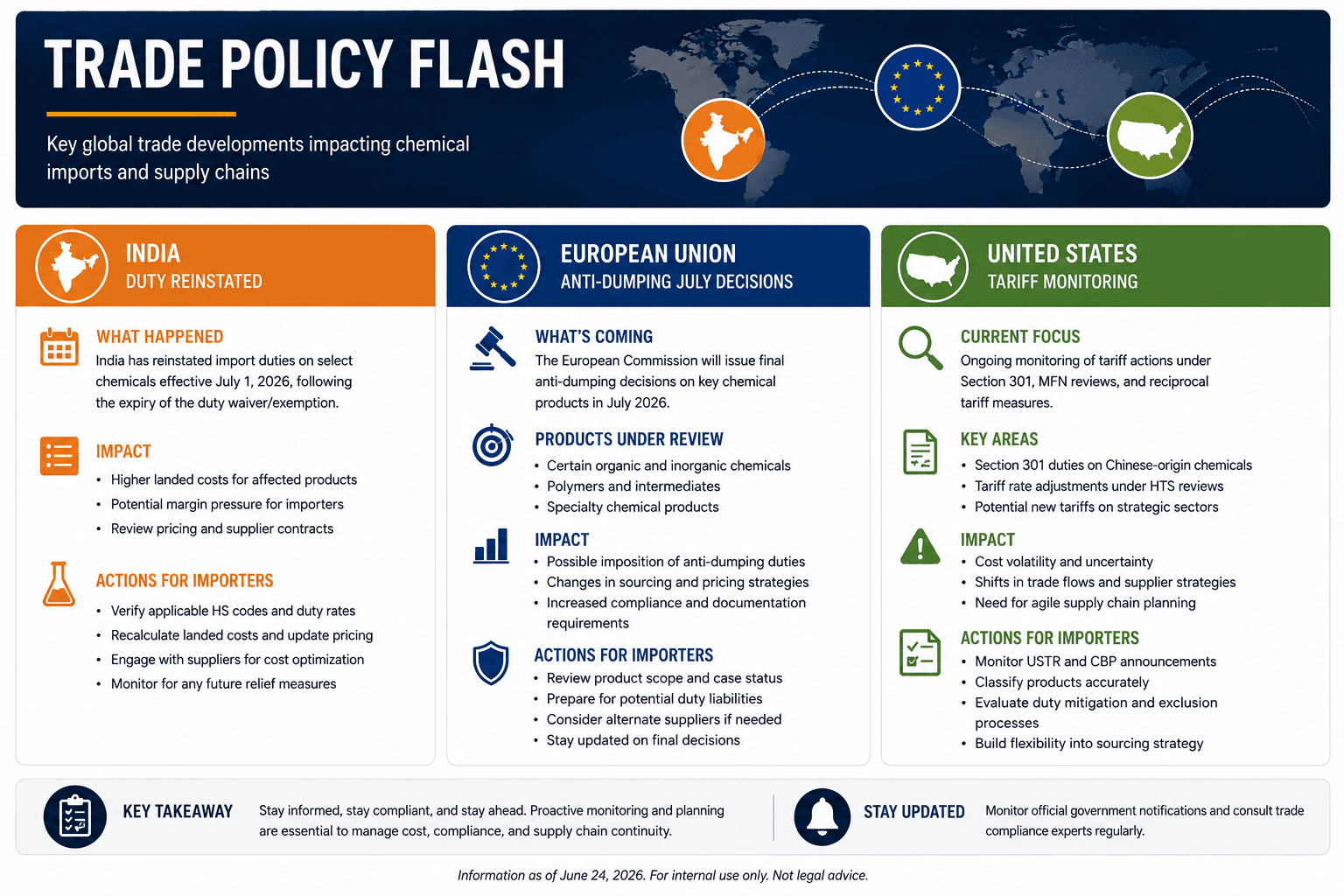
Trade Policy Flash: India Duty Reinstated, EU Anti-Dumping July Decisions, US Tariff Monitoring
July 1 brings major trade policy changes for chemical buyers: India’s duty waiver has ended, EU anti-dumping decisions on Chinese chemicals are nearing publication, and US tariff rules remain active. Procurement teams should immediately reprice H2 sourcing assumptions.

Circular Economy Act Progress: Key Provisions Advancing in European Parliament
The EU Circular Economy Act is set to reshape the chemical industry with new recycled content regulations, chemical recycling mandates and EPR compliance. By 2026, manufacturers must adapt to PyOil technology and meet stringent sustainability targets.
Don't miss out on our updates! Subscribe to our newsletter now
We're committed to your privacy. Tradeasia uses the information you provide to us to contact you about our relevant content, products, and services. For more information, check out our privacy policy.