
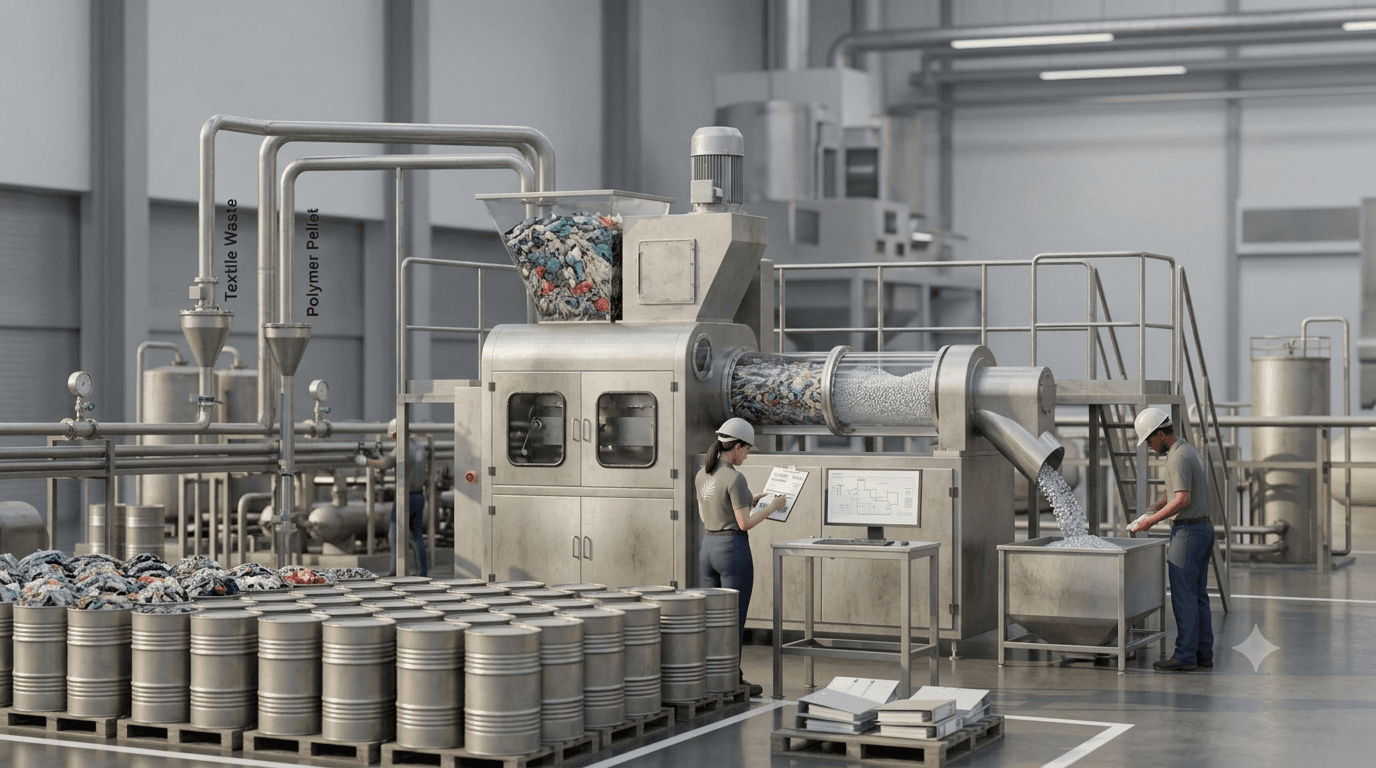
Green chemistry has moved beyond pilot programs and early adoption phases in 2026. Circular feedstocks are now being integrated into mainstream chemical supply chains, driven by regulatory reporting requirements, corporate ESG targets and increasing customer demand for traceable low carbon materials.
Three developments stand out this year: BASF’s Loopamid scaling in nylon recycling, closed loop polycarbonate systems from major producers, and growing use of pyrolysis oil in industrial cracking operations.
For procurement teams, these are no longer experimental options. They are becoming structured procurement categories with defined certification requirements and commercial supply chains.
BASF Loopamid and the Shift to Textile-to-Textile Nylon Recycling
BASF’s Loopamid, a recycled nylon 6 material produced from textile waste, has reached commercial validation and is now scaling into apparel and fashion supply chains.
This development marks a significant shift in polyamide sourcing strategies.
Unlike mechanical recycling systems that often degrade material performance, Loopamid is designed to maintain polymer quality suitable for high performance textile applications.
Key implications for buyers include:
Increased availability of recycled nylon 6 for apparel and technical textiles.
Greater alignment with circular economy reporting frameworks under CSRD.
Improved material traceability for brand sustainability claims.
Expansion of certified recycled polymer supply contracts.
Fashion and sportswear brands are among the earliest adopters, but industrial textile users are beginning to evaluate integration as well.
Closed Loop Polycarbonate Recycling Gains Industrial Scale
Closed loop recycling for polycarbonate materials is being advanced by producers such as Covestro and Mitsubishi Chemical, focusing on recovering high quality feedstocks from post consumer and industrial waste streams.
Sources include:
Waste optical media and electronic components.
Automotive lighting and interior plastic systems.
Industrial polycarbonate scrap streams.
This approach enables recovery of monomer or high grade polymer suitable for reuse in demanding applications.
For procurement teams, this introduces a new sourcing pathway that supports both performance requirements and sustainability reporting obligations.
Benefits include:
Reduced reliance on virgin fossil based feedstocks.
Improved lifecycle emissions performance.
Increased compliance alignment with corporate ESG targets.
Verified circular content through certification systems.
Pyrolysis Oil Becomes a Mainstream Cracker Feedstock
Pyrolysis oil derived from post consumer plastic waste is increasingly being co processed in European and Asian steam crackers.
This development represents one of the most significant industrial scale circular feedstock integrations in petrochemicals to date.
Key characteristics include:
Conversion of mixed plastic waste into liquid hydrocarbon feedstock.
Integration into existing cracker infrastructure without full process redesign.
Gradual increase in certified circular polymer output.
Expansion across polyethylene, polypropylene and other derivative chains.
While quality variability remains a technical consideration, improving standardisation is supporting broader adoption.
ISCC+ Certification Becomes the Baseline Requirement
As circular chemistry scales, certification frameworks are becoming essential rather than optional.
The ISCC+ system has emerged as the dominant standard for verifying circular and bio based chemical feedstocks.
For procurement teams, ISCC+ certification now plays a central role in supplier qualification.
Key requirements include:
Mass balance accounting for circular content allocation.
Chain of custody documentation across supply networks.
Third party verification of feedstock origin.
Auditable sustainability claims for downstream customers.
Without certification, circular claims are increasingly difficult to validate in regulated or brand sensitive markets.
Why July Is a Critical Qualification Window
Mid 2026 represents an important procurement decision point for circular chemistry adoption.
Suppliers across nylon, polycarbonate and pyrolysis oil value chains are actively expanding commercial availability, but capacity remains uneven across regions.
This creates a timing advantage for buyers willing to engage early.
Procurement teams should consider:
Initiating qualification discussions with Loopamid suppliers.
Engaging Covestro and Mitsubishi Chemical circular polycarbonate programs.
Reviewing pyrolysis oil supply contracts for ISCC+ alignment.
Validating certification documentation before volume commitments.
Aligning internal ESG reporting requirements with supplier capabilities.
Early engagement improves access to certified supply before demand tightens further.

How Circular Feedstocks Are Changing Procurement Strategy
Circular chemistry is no longer a niche sustainability initiative. It is becoming a structured procurement category integrated into cost, compliance and brand positioning decisions.
Key strategic changes include:
Procurement teams now evaluate recycled content alongside price and performance.
ESG reporting requirements influence supplier selection decisions.
Certification status affects eligibility for EU and global markets.
Supply contracts increasingly specify circular content percentages.
Long term supplier relationships depend on traceability capability.
This shift requires closer coordination between procurement, sustainability and product development teams.
Commercial Reality: Scaling but Not Yet Fully Standardised
Despite rapid progress, circular chemical supply chains are still in a scaling phase.
This creates several practical constraints:
Limited availability of certified circular feedstocks in some regions.
Price premiums compared to virgin materials in certain applications.
Variability in feedstock quality depending on waste streams.
Evolving certification interpretations across jurisdictions.
Procurement teams should balance sustainability objectives with supply continuity and cost considerations during contract negotiations.
What Buyers Should Prioritize Now
Organizations evaluating circular chemistry integration should focus on structured qualification rather than ad hoc purchasing.
Recommended actions include:
Identify applications suitable for recycled nylon, polycarbonate or circular hydrocarbons.
Confirm ISCC+ certification status across all potential suppliers.
Align sustainability reporting requirements with procurement specifications.
Initiate pilot volumes before scaling to full commercial contracts.
Evaluate long term supply security for circular feedstock programs.
Early adoption improves access to supply and strengthens ESG reporting credibility.
The Bottom Line for Circular Chemical Procurement
Green chemistry is transitioning from innovation narrative to procurement reality in 2026. Loopamid, closed loop polycarbonate recycling and pyrolysis oil integration are no longer isolated initiatives but emerging pillars of industrial supply chains.
For buyers, success depends on early qualification, certification verification and structured integration into procurement strategies rather than reactive adoption.
Companies that engage early with certified circular suppliers will be better positioned to meet both regulatory expectations and customer driven sustainability demands.
Ready to source chemicals from verified global suppliers? Explore competitive offers on our platform today.
Nylon 6 CAS: 25038-54-4