Introduction
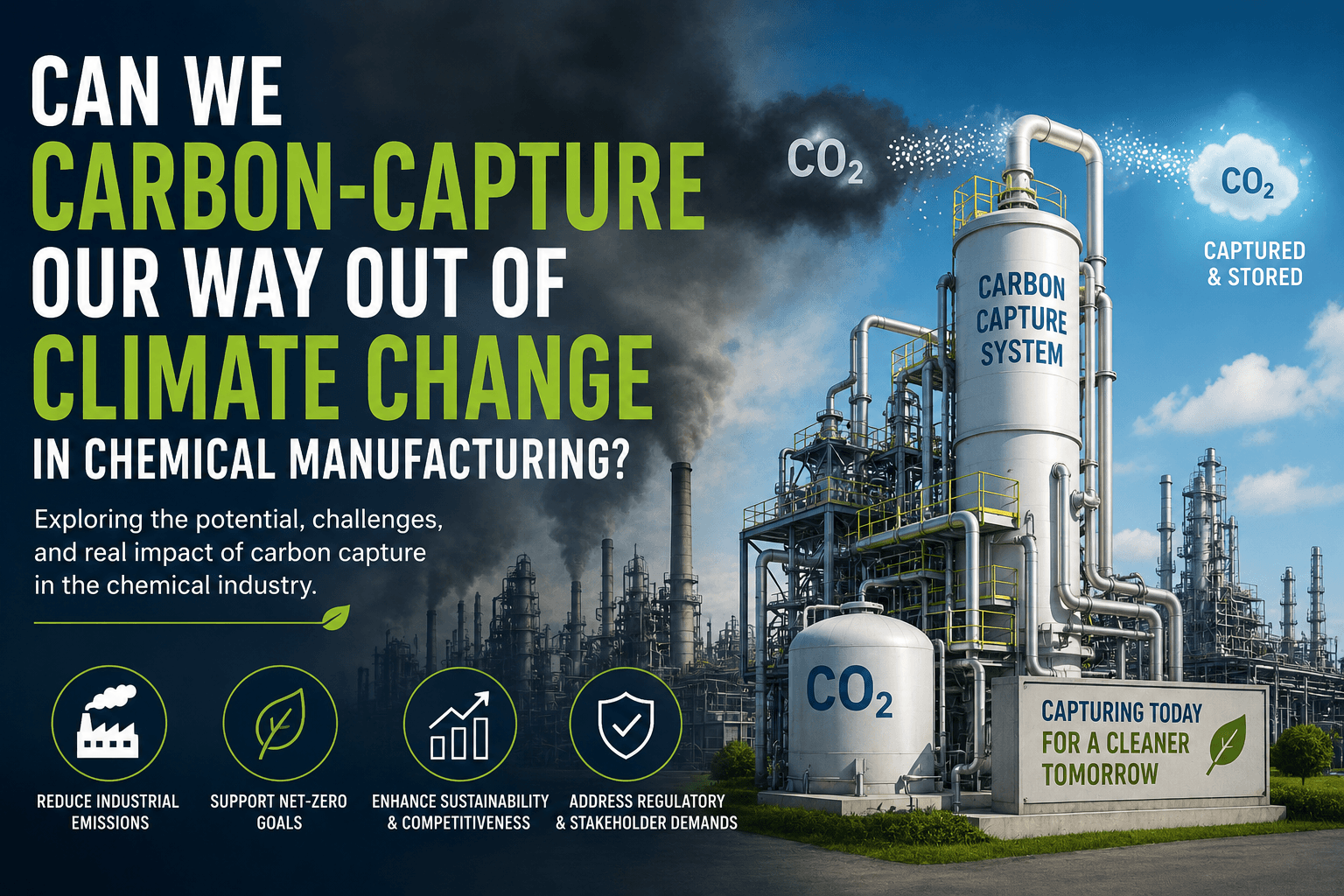
The chemical industry is responsible for roughly 7–9% of global CO2 emissions, a share that is difficult to reduce because many processes are carbon‑intensive by design. In June 2026, the Chemical & Engineering News (C&EN) published a discussion exploring whether carbon capture and storage (CCS) can be the missing lever for chemical manufacturing decarbonization. This article reviews the state‑of‑the‑art technologies, economic realities, and real‑world pilot projects that shape this debate.
Why CCS Is a Complicated Option for Chemicals
Unlike power generation, chemical plants produce a variety of by‑products, some of which are themselves valuable feedstocks. Capturing CO2 from a stream that contains methane, hydrogen, or ammonia can be technically challenging. Additionally, the energy penalty for compression and transport can offset the net emission reduction.
Technical Barriers
- Mixed Gas Streams: Capturing CO2 from syngas or steam reforming requires selective adsorbents that can tolerate high temperatures and flue gas contaminants.
- Process Integration: Retrofitting existing plants with capture units often demands significant redesign of heat integration and storage solutions.
- Storage Compatibility: Geological storage sites must be geochemically compatible with the captured CO2 to prevent leakage.
Economic Considerations
The cost of CCS in the chemical sector is currently estimated at $70–$120 per tonne of CO2 captured, depending on scale and technology maturity. This figure is considerably higher than the $50–$80 per tonne range typical for power stations, largely due to the higher energy demand and complex gas mixtures.
Current CCS Deployments in the Chemical Sector
Despite the hurdles, several pilot and commercial projects are underway, demonstrating both promise and pitfalls.
Case Study 1: Shell’s CRS Pilot in Texas
Shell’s Capture, Recapture, and Sequestration (CRS) demonstration at its Texas chemical hub captured 30,000 tonnes of CO2 per year from its ethylene cracker. The system used a proprietary aqueous amine solvent that operates at 120°C, achieving a 95% capture efficiency.
Case Study 2: Borealis’ Post‑Combustion Capture at the Austria Plant
- Captured 8,000 tonnes/year of CO2 from ammonia synthesis.
- Integrated a low‑temperature swing adsorption (LTSA) module to minimize energy use.
- Resulted in a 12% reduction in the plant’s carbon intensity.
Policy and Incentives: The Missing Piece?
Governments worldwide are starting to offer carbon pricing mechanisms, tax credits, and low‑interest loans to offset CCS capital costs. In the EU, the Carbon Capture, Utilisation and Storage (CCUS) Regulation sets a target of 3.5 MtCO2 per year by 2030, with financial support for pilot projects.
Beyond Capture: Utilisation Pathways
Carbon capture is only part of the solution. The captured CO2 can be repurposed for:
- Enhanced Oil Recovery (EOR): Increasing oil output but adding to the fossil fuel lifecycle.
- Chemical Feedstock: Converting CO2 into methanol, urea, or polymer precursors.
- Mineralisation: Reacting CO2 with alkaline minerals to produce stable carbonates.
These utilisation routes can offset the cost of capture, but they also raise questions about the net climate benefit.
Future Outlook: 2026–2035
Emerging technologies such as cryogenic CO2 separation, membrane‑based capture, and electrochemical reduction are showing early promise in lab settings. If commercial scaling can be achieved, the cost per tonne could drop below $50 by 2035.
Industry leaders agree that CCS will likely play a role in a multi‑pronged decarbonization strategy, but it cannot be the sole solution. Energy efficiency upgrades, renewable hydrogen adoption, and circular chemistry are equally essential.
Conclusion
The question is not whether carbon capture can help the chemical industry, but how it can be integrated effectively and cost‑competitively. With continued investment, supportive policy, and technology breakthroughs, CCS could become a cornerstone of a low‑carbon chemical economy.