

Choline Chloride 75% Liquid CAS: 67-48-1

Choline Chloride 75% Liquid CAS: 67-48-1

US chemical imports are projected to fall to their lowest level since 2020, while exports are expected to reach their lowest point since 2021. Procurement teams should understand how shifting trade patterns could reshape sourcing strategies, regional supply chains and future market opportunities.

The expiration of the temporary Jones Act waiver has restored standard domestic shipping rules across US chemical logistics. As Gulf Coast supply chains continue recovering, distributors and manufacturers are once again navigating a tighter domestic tanker market and higher coastwise transportation costs.

Thailand's emergency fuel export ban highlighted how government intervention can rapidly disrupt downstream chemical supply chains. Procurement teams that rely on Thai petrochemical exports can use this case to strengthen sourcing strategies and reduce exposure to sudden market shocks.

The March 18 fire on the Parimal tanker and the May 7 strike on JV Innovation mark a turning point for specialty chemical shipping. These attacks show that vessel nationality no longer shields operators from conflict‑related threats. Chemical logistics planners must now factor Gulf of Oman routes into their risk assessments.
Brent crude has dropped to $72.60 despite ongoing military escalation across the Gulf. This unusual market reaction signals that supply recovery currently outweighs geopolitical risk, creating important implications for petrochemical procurement and chemical pricing in the months ahead.
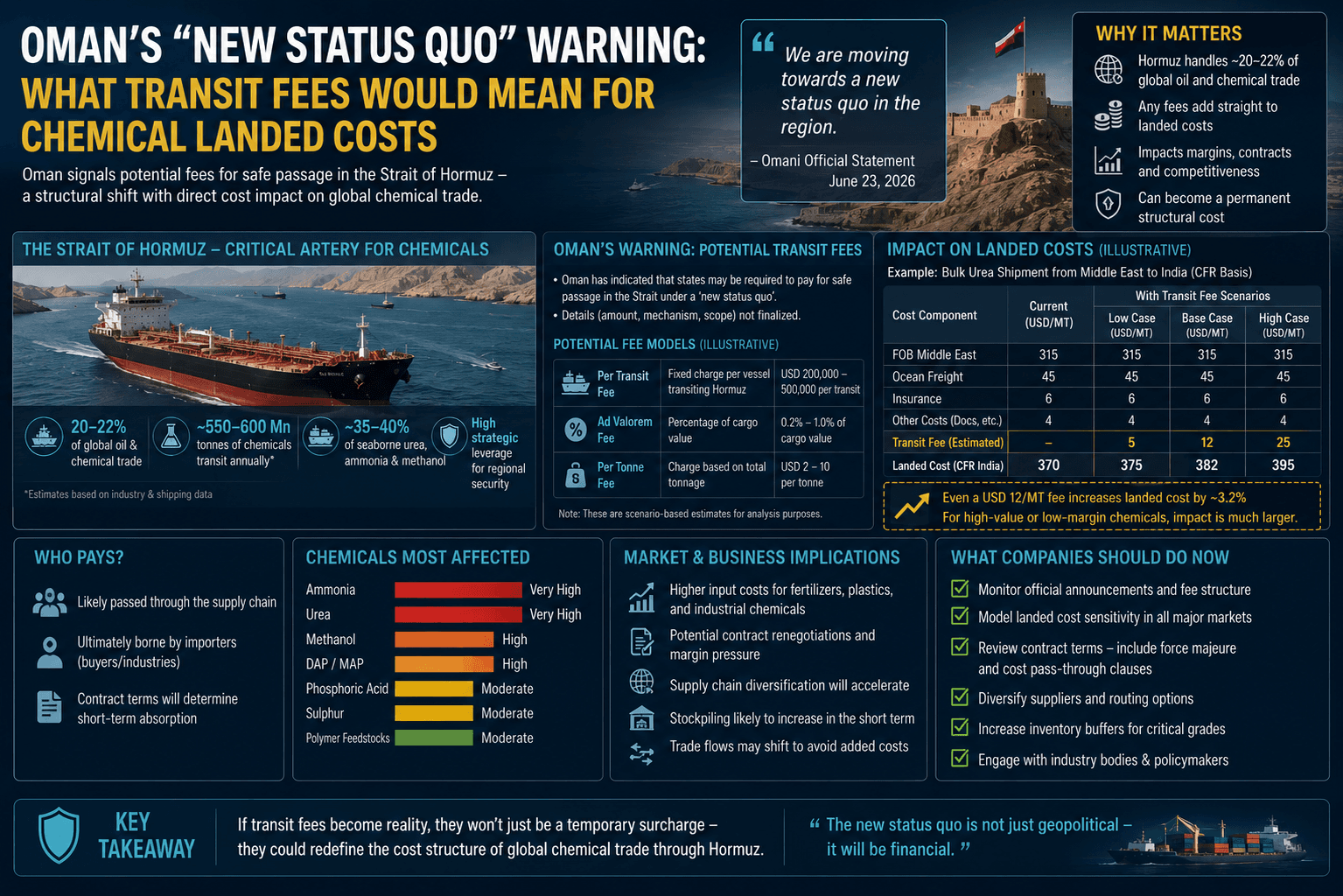
Oman’s warning that Hormuz may never return to pre-war conditions raises the prospect of permanent transit fees for commercial vessels. Chemical buyers should immediately model higher landed costs into H2 2026 procurement planning as Gulf shipping economics may have changed permanently.
We're committed to your privacy. Tradeasia uses the information you provide to us to contact you about our relevant content, products, and services. For more information, check out our privacy policy.