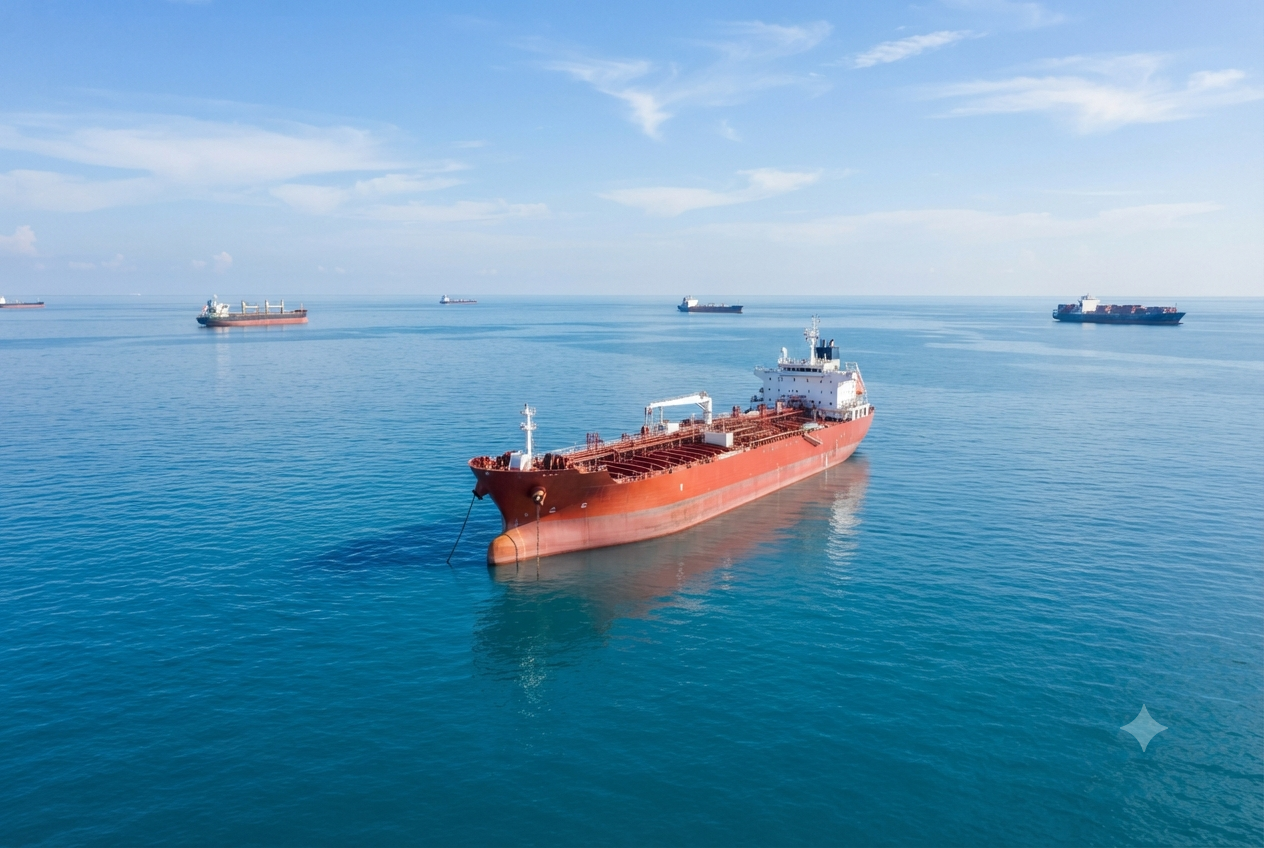
More than 22,500 mariners are still confined to over 1,550 vessels anchored inside the Persian Gulf, a figure confirmed by General Dan Caine, chairman of the Joint Chiefs of Staff, in a recent briefing. Behind every delayed cargo of monoethylene glycol or stalled tanker of feedstock sits a crew that has spent weeks or months unable to leave, unable to rotate home and often unable to reach family. For chemical procurement professionals who source from Gulf producers, this is not an abstract geopolitical detail. It is the human layer underneath a disruption that has already reshaped sourcing strategy across the industry.
Who Are the 22,500 Mariners Trapped in the Gulf
The mariners stuck behind the Strait of Hormuz blockade come from dozens of nations, and most are not headline names. They are working crews doing the unglamorous job of moving the world's chemicals, fuels and raw materials.
Ship captains and senior officers responsible for vessel safety in a live conflict zone.
Engineers keeping refrigeration, ventilation and propulsion systems running on ships with limited resupply.
Deck crew and ratings, many on fixed-term contracts that assumed a normal transit schedule, not months at anchor.
Nationals of India, the Philippines, Ukraine, Turkey and a long list of other maritime labor exporting countries.
Contracts in the shipping industry are typically built around defined rotation periods. When a strait closes and stays closed, those rotations collapse. Crew members who expected to disembark in weeks have instead remained aboard through repeated ceasefire announcements, blockades and renewed hostilities.
Why the Strait of Hormuz Crisis Still Threatens Global Chemical Supply
The strait carries roughly a fifth of the world's oil and a similar share of liquefied natural gas in normal times, alongside a steady flow of petrochemical feedstocks and finished chemical products. Since the conflict began, traffic through the waterway has collapsed far below prewar norms, even during periods when a ceasefire was technically in place.
Several factors keep the bottleneck in place even after diplomatic progress:
Mine clearance. Iran is believed to have laid mines in parts of the strait, and clearing them has been estimated to take months even once fighting stops.
Insurance gaps. War risk premiums spiked sharply during the conflict, and underwriters have said they need sustained, incident-free transit before pricing normalizes.
Conditional access. Iran has at points required its own approval, and reportedly a toll, for vessels transiting the strait, which is separate from any formal ceasefire terms.
Repeated closures. The strait has been declared reopened and then closed again multiple times as the ceasefire has been tested by unrelated regional strikes.
For chemical buyers, this means the strait cannot be treated as a binary switch that flips from closed to open. Even a signed agreement between Washington and Tehran has not translated into normal shipping volumes.
How the Mariner Crisis Connects to Chemical Procurement Risk
Procurement dashboards track lead times, freight rates and contract fulfillment. They rarely capture what happens to the people executing the voyage. That gap matters for two reasons.
First, crew fatigue and reduced morale on stranded vessels are a direct safety risk. A tired, under-resourced crew operating in a contested waterway is more exposed to accidents and slower to respond to emergencies, which in turn raises the risk profile of the cargo itself, including hazardous or reactive chemicals.
Second, the humanitarian dimension is becoming a formal part of how supply chains are expected to be governed. The International Maritime Organization had an evacuation plan for seafarers that was paused after an attack on the vessel Ever Lovely, and is now presumably being reactivated as conditions allow. A multinational coalition has also proposed convoy protection through the strait, motivated in part by the safety of crews rather than cargo value alone.
Supply Chain Risks and Sourcing Challenges for Gulf-Origin Chemicals
Buyers sourcing petrochemicals, fertilizers, polymers and intermediates from Gulf producers are dealing with a stacked set of risks that go well beyond price.
Extended lead times. Even confirmed shipments face unpredictable delays while vessels wait for a safe transit window.
Freight and insurance cost spikes. War risk cover has pushed shipping costs up substantially compared with prewar baselines, and those costs get passed through contracts.
Route uncertainty. Some cargo is being rerouted through Oman's southern route or overland options, which are far more limited in capacity than the strait itself.
Crew availability. Shipping lines report difficulty finding crews willing to sign onto Gulf-bound rotations, which is beginning to constrain vessel deployment independent of the political situation.
Force majeure clauses that once felt like boilerplate contract language are now being actively invoked across the industry. Procurement teams that assumed Gulf supply was as reliable as any other origin have had to rebuild contingency sourcing almost from scratch.
The ESG and CSRD Angle: Why Human Rights Now Belong in Procurement Risk Frameworks
Under the EU's Corporate Sustainability Reporting Directive, companies with European exposure are increasingly expected to disclose human rights risks embedded in their supply chains, not just environmental and governance metrics. A stranded workforce moving your raw materials fits squarely inside that disclosure scope.
This is a shift from how supply chain risk has traditionally been framed in the chemical sector. Historically, risk registers tracked feedstock availability, price volatility and regulatory compliance. Adding a human cost dimension means asking harder questions:
Are the vessels carrying our cargo adequately crewed and resupplied.
Are shipping partners transparent about crew welfare conditions during extended delays.
Does our supplier selection process weigh humanitarian exposure alongside commercial terms.
Companies that get ahead of this reporting expectation, rather than treating it as a compliance afterthought, will be better positioned as CSRD enforcement matures.
What Procurement Teams Need to Know
There are practical steps chemical buyers can take right now without waiting for the geopolitical situation to fully resolve.
Diversify origin points for critical chemicals where feasible, even if it means paying a premium for non-Gulf supply in the near term.
Ask suppliers direct questions about vessel crewing, welfare provisions and contingency routing rather than assuming shipping logistics are someone else's problem.
Build longer buffer windows into contracts and inventory planning for any cargo transiting the strait, since even ceasefire periods have not restored normal transit volumes.
Track IMO and coalition updates on evacuation plans and convoy protections, since these directly affect vessel availability and insurance terms.
None of these steps eliminates the underlying risk. They do reduce the odds of being caught flat footed by the next closure, mining incident or insurance repricing.
The Bottom Line for Procurement Teams
The 22,500 mariners currently anchored in the Gulf are not a footnote to the chemical supply disruption. They are the workforce absorbing the direct consequences of a conflict that procurement teams have mostly experienced through price sheets and delayed shipment notices. Recognizing that human cost is becoming both a moral expectation and a regulatory one under frameworks like CSRD.
Buyers who treat crew welfare and route reliability as part of supplier due diligence, rather than someone else's problem, will be better prepared for whatever the next phase of the Hormuz crisis brings. Ready to source Monoethylene Glycol from verified global suppliers? Explore competitive offers on our platform today.
Monoethylene glycol CAS: 107-21-1